

Table of Contents
- What Defines the Best Anti-Aging Devices for Home?
- Comparing At-Home Technology: LED, Microcurrent, and Tools
- The Benefits of LED Light Therapy Masks for Skin
- How to Use Gua Sha for Facial Tension and Contouring
- Incorporating Serums into Beauty Device Routines
- How Long to See Results from Beauty Tools
- Safety, Contraindications, and Device Care
- Building Your At-Home Anti-Aging Routine
- Frequently Asked Questions
Last Updated: September 6, 2026
Choosing the best anti-aging devices for home use has become a genuine alternative to regular clinic visits, but the sheer range of options can feel overwhelming. The right device should feel like a natural extension of your evening routine, not another complicated step. This guide breaks down the leading technologies, what they realistically do, and how to match a device to your skin's needs without the hype. We will cover LED therapy, microcurrent, and traditional tools like gua sha, and explain how to see lasting results from your investment.
What Defines the Best Anti-Aging Devices for Home?
The best anti-aging devices for home use share a few non-negotiable traits: they are safe for untrained hands, they target a specific skin concern with a clear mechanism, and they produce results you can maintain with consistency. A device that promises everything usually delivers very little. Instead, look for technology that addresses skin firmness, skin elasticity, or lymphatic drainage directly.
Most reputable home devices fall into two camps. The first uses light energy, such as LED or near-infrared, to stimulate cellular activity. The second uses physical or electrical stimulation, like microcurrent or massage, to tone facial muscles and improve circulation. Understanding this distinction is the first step in choosing wisely. Consider your primary concern: is it fine lines and wrinkles, loss of firmness, or daily puffiness? Your answer will point you toward the right category of device.
Comparing At-Home Technology: LED, Microcurrent, and Tools
Each technology works on a different layer of the skin, which is why comparing them on price alone is a mistake. LED light therapy uses specific wavelengths of light (measured in nanometres) that penetrate the skin to support cellular rejuvenation. It is a passive treatment; you wear a mask and relax while the light does its work. Microcurrent devices deliver a low-level electrical current that mimics the body's natural signals, which can help with facial contouring and toning. These require a conductive gel and active gliding movements.

Traditional tools, such as a gua sha or a facial roller, offer a different benefit again. They do not emit light or electricity; instead, they provide manual massage that encourages lymphatic drainage and helps depuff the face. The table below summarises the key differences to help you decide.
Technology |
How It Works |
Best For |
Typical Commitment |
|---|---|---|---|
LED Light Therapy |
Specific light wavelengths penetrate skin |
Skin tone & texture support, calming redness |
10-20 mins, 3-5 times weekly |
Microcurrent |
Low-level electrical current |
Toning, lifting, facial contouring |
5-15 mins, 4-5 times weekly |
Gua Sha / Roller |
Manual massage and pressure |
Depuffing, lymphatic drainage |
5-10 mins, daily |
The Benefits of LED Light Therapy Masks for Skin
LED light therapy masks have become the centrepiece of many at-home routines for good reason, but understanding how they work helps set realistic expectations. The technology is based on photobiomodulation, a process where specific wavelengths of light are absorbed by chromophores inside your skin cells. This absorption is thought to interact with the mitochondria, the energy-producing part of the cell, in a process linked over time to a smoother, more refreshed-looking complexion.
Different wavelengths penetrate to different depths and target different concerns. Red light, typically around 630nm, is absorbed more superficially and is most often associated with a smoother, firmer-looking complexion and softer-looking fine lines over time (peer-reviewed research). Near-infrared light, usually in the 810nm to 850nm range, penetrates deeper into the dermal layers and is thought to support cellular repair and reduce inflammation. Some masks, like our 4-Color LED Light Therapy Mask, also include blue light (around 415nm), which is used to help balance oil production, and yellow light, which is thought to support an even skin tone.

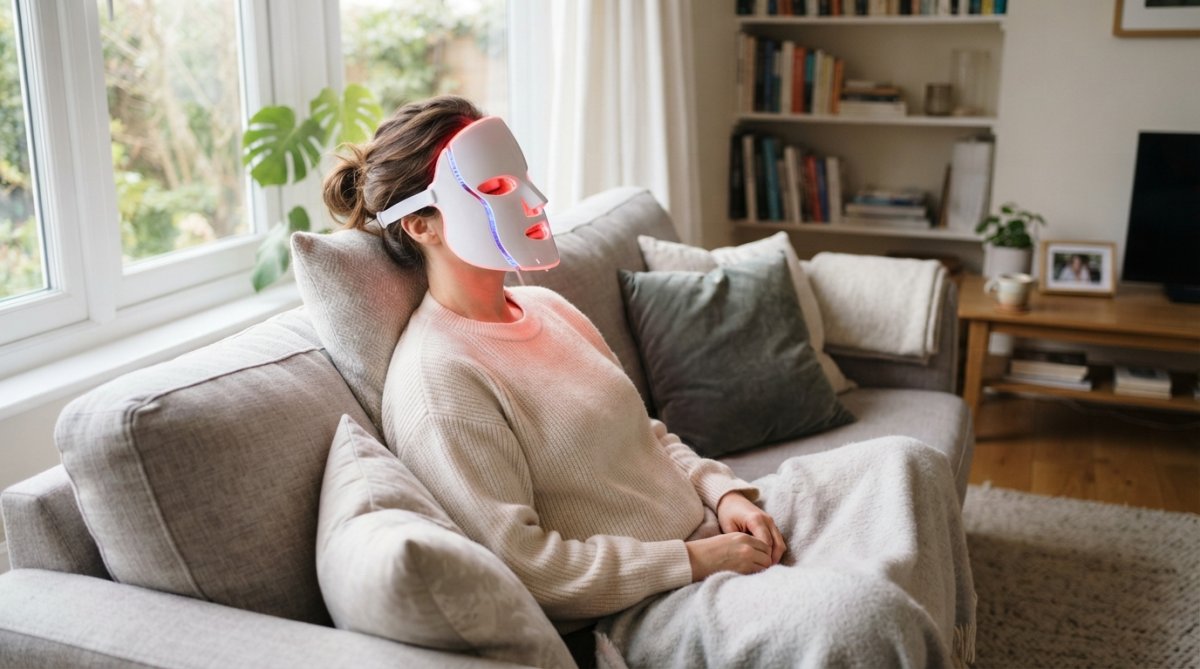
Consistency matters more than session length. Most published studies on LED for skin rejuvenation use treatment protocols of several sessions per week over a period of 8 to 12 weeks, with each session lasting between 10 and 20 minutes (PubMed). This is because the biological response, skin renewal, for instance, is cumulative and gradual. A single session will not produce a visible lift, and expecting it to will only lead to disappointment.
It is also worth noting what LED therapy is not. It is not a substitute for a clinical procedure like a laser resurfacing treatment, which removes the top layers of skin to trigger a more aggressive healing response. LED is a gentler, supportive technology that works best when used consistently over months, not as a one-off fix. The appeal of a mask over a handheld wand is the hands-free convenience, which makes it far easier to maintain that consistency. Our LED Red Light Therapy Mask covers both the face and neck in one session, making it simple to use while reading or resting. Both masks are cordless and USB-C rechargeable, designed for a convenient 10-minute reset rather than a lengthy chore.
How to Use Gua Sha for Facial Tension and Contouring
A gua sha tool is a small, flat stone, often made of jade or rose quartz, used to massage the face. It is one of the most accessible ways to relieve facial tension and encourage lymphatic drainage, which helps reduce morning puffiness. The technique matters more than the tool itself. Always start with a clean face and apply a facial oil or serum to allow the stone to glide smoothly without pulling the skin.
Hold the gua sha at a 30 to 45-degree angle against your skin and use gentle, sweeping strokes. Work from the centre of your face outward, following your jawline up toward your ears, then down your neck. Repeat each stroke five to ten times. A common mistake is pressing too hard; the pressure should be firm but comfortable, never painful. Used consistently, this practice can help define the jawline and give the face a more rested appearance.
Incorporating Serums into Beauty Device Routines
The order in which you apply products and use devices can significantly affect your results, yet it is one of the most under-discussed aspects of at-home beauty tech. A simple rule of thumb is to think about what each device needs to do its job. For gua sha, the skin needs slip to prevent friction. For LED therapy, the skin needs to be clean so the light can penetrate effectively. For microcurrent, the skin needs a conductive medium to carry the electrical current.
For gua sha and facial rollers: Apply a lightweight facial oil or a hydrating serum first. This creates a smooth surface for the stone to glide over without pulling or tugging at the skin. A peptide serum, such as Haven and Harlow's Renewal Serum with Copper Tripeptide-1, works well here because it provides enough slip while also delivering ingredients that support smoother, healthier-looking skin over time. One point worth noting about copper peptides: Most of the industry sources GHK-Cu as a pre-diluted 1% solution, so a "1% GHK-Cu" label often means only a fraction is real peptide. Our Renewal Serum is formulated with 0.2% pure Copper Tripeptide-1. This clarity matters when you are investing in a routine designed to support your skin barrier over the long term.
For LED light therapy masks: Apply your serum before the mask, but keep it lightweight. Water-based serums are ideal because they do not leave a heavy residue that could block light. Avoid layering thick creams, physical sunscreens, or oil-based products under the mask, as these can create a barrier that scatters the light. After your session, you can follow with a moisturiser to seal everything in.
For microcurrent devices: These require a conductive gel to allow the current to move across the skin. Using a serum alone is usually not enough, as most are not formulated to conduct electricity. If you are using a microcurrent device, follow the manufacturer's instructions for the recommended conductive medium, and apply your treatment serums afterwards, once the skin is clean.
How Long to See Results from Beauty Tools
Patience is the hardest part of any at-home routine, and the timelines differ depending on the technology. With LED light therapy, the changes are gradual because skin renewal is a slow, gradual process. Most people notice a difference in skin texture and a calmer, more even complexion after four to six weeks of consistent use, with more noticeable firming around the three-month mark.
Microcurrent results are more immediate. Because the current works on muscle tissue, you may see a temporary lift after a single session. However, this effect fades within a day or two, and lasting toning requires regular use over several weeks. Gua sha offers instant gratification in the form of reduced puffiness, but the contouring effects are cumulative. The unifying factor across all these devices is consistency; using a device once a week will not deliver the same results as a steady routine.
Safety, Contraindications, and Device Care
At-home anti-aging devices are generally safe for most people, but they are not for everyone. LED light therapy is considered low-risk, yet those with light-sensitive skin conditions or who are taking medications that cause photosensitivity should seek professional advice first. Microcurrent devices should be avoided by anyone with a pacemaker, a history of seizures, or who is pregnant. If you have any underlying health concerns, it is always wise to consult your doctor or a dermatologist before introducing a new device.
Caring for your device is just as important as using it. LED masks should be wiped down after each use with a soft, dry cloth; never submerge them in water. Gua sha stones should be washed with mild soap and warm water and dried thoroughly. Store all devices away from direct sunlight and humidity. Following these steps will keep your tools hygienic and extend their lifespan, which is a key part of making an at-home routine sustainable.
Building Your At-Home Anti-Aging Routine
A realistic routine is one you can sustain. Start by choosing a single technology that addresses your main concern, rather than buying three devices at once. If your goal is smoother, firmer-looking skin, an LED mask is a strong foundation. If puffiness and facial tension are your primary issues, a gua sha set paired with a nourishing serum may be the better first purchase.
The routine below offers a simple weekly structure that can be adapted to your lifestyle. It is designed to fit around your existing skincare products, not replace them.
Day |
Morning |
Evening |
|---|---|---|
Monday |
Cleanse, Vitamin C, SPF |
Cleanse, Serum, LED Mask (10 min) |
Tuesday |
Cleanse, SPF |
Cleanse, Serum, Gua Sha Massage |
Wednesday |
Cleanse, Vitamin C, SPF |
Cleanse, Serum, LED Mask (10 min) |
Thursday |
Cleanse, SPF |
Cleanse, Serum, Gua Sha Massage |
Friday |
Cleanse, Vitamin C, SPF |
Cleanse, Serum, LED Mask (10 min) |
Weekend |
Cleanse, SPF |
Rest or gentle gua sha |
The key is to listen to your skin. If it feels sensitive, reduce the frequency of your LED sessions. If your skin feels tight after using a device, your moisturiser or serum may need to be richer. Your skin barrier health should always come first. Choosing the right device is only the beginning; the long-term benefits come from showing up consistently and treating the ritual as a moment of self-care, not another task to complete.
Finding the right anti-aging devices for home use is about matching the technology to your skin's needs and your willingness to be consistent. We curate devices and serums that work together, like our LED masks and Renewal Serum, so you can build a routine that feels simple and effective. Every product in our range is made by an Australian-owned business and backed by a 30-day money-back guarantee, so you can try it with confidence. Explore the collection and find the tool that fits your routine.
Frequently Asked Questions
Are LED light therapy masks suitable for all skin types?
Most LED light therapy masks are designed to suit all skin types, but a patch test is always a sensible first step. Our 4-Color LED Light Therapy Mask uses specific wavelengths for different concerns: red (630nm) and near-infrared (850nm) for smoother, firmer-looking skin, blue (460nm) to help balance oil, and yellow (590nm) for an even complexion. If you have a known skin condition or are on medication that increases light sensitivity, check with your GP or dermatologist before starting regular use.
How often should I use facial massage tools like gua sha?
Gua sha is gentle enough for daily use, and many people find a short session each evening helps them unwind. The key is technique over pressure. Use light to medium strokes along the jaw, cheekbones, and forehead, always moving outward toward the lymph nodes. Pair it with a few drops of facial oil or serum to let the stone glide smoothly. If you notice any bruising, ease off on the pressure and give your skin a day to recover.
How long to see results from beauty tools like LED masks?
Consistency matters more than intensity. With a device like an LED mask, most people notice a change in skin texture and tone within four to six weeks of using it three to five times a week. Skin renewal is a gradual process, so the most visible results for fine lines and firmness typically appear around the three-month mark. Set a realistic expectation: at-home devices support your skin's natural renewal cycle, they don't deliver instant transformations.
Can I use my serum with an LED light therapy mask?
Yes, and it's often the most effective way to use both. Apply a hydrating serum first, let it absorb for a minute, then wear your LED mask over the top. The light wavelengths are not blocked by skincare, so the serum simply adds a layer of nourishment while the light works. Avoid active ingredients like retinol or strong acids immediately before a session if your skin is sensitive, and always follow the mask with moisturiser to lock everything in.